The risks of artificial intelligence tend to get discussed in a single register.
The tool invents a court case that never existed. It hands confidential information to a server no one vetted. It returns fluent, confident filler that falls apart on a second read. Those failures are real, they have earned the coverage they get, and they share a common thread. Each is a blunt-force error, the kind that announces itself, trips an alarm, and makes the cautionary headline. In every one of them, the tool got something plainly wrong.
There is another cost that almost never gets named, subtler than any of these and harder to see, and it shows up even when everything the tool produces is accurate. No case is invented, no law is misstated, and nothing in the document would fail a fact-check. It has nothing to do with accuracy. It has to do with what reliance on the tool reveals about the person leaning on it, and what that revelation quietly costs, often before the substance of a matter has been joined at all. A legal dispute is a good place to watch it happen.
The Sudden Expert
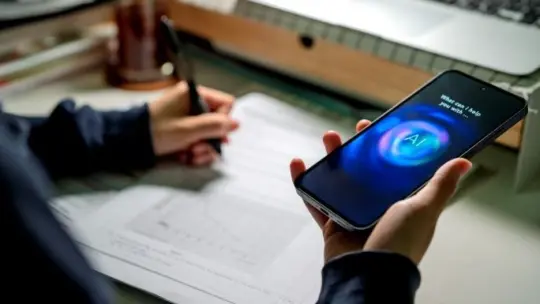
Picture a disagreement serious enough to commit to writing, the kind that turns on a real grievance, an unpaid obligation, a broken promise, a line that should not have been crossed. The aggrieved party has no particular background in the law, wants to open from strength, and turns to a popular chatbot to produce the first letter. A few seconds later there is a polished, confident document that states the claim, makes a forceful demand, and sets a firm deadline. The impulse is an understandable one. The tool is right there, it costs almost nothing, and it is good at this.
Then the letter lands on a desk across town, and the first thing the experienced reader notices is not a stray mark of punctuation. It is incongruity. A modest matter, a sender with no evident reason to be an expert, and yet a letter that speaks with the fluency of someone who has handled a hundred of them. Command of that kind is usually earned slowly and tends to show its history, so a sophistication that appears from nowhere invites an obvious explanation, and these days that explanation is rarely hard to guess. The inference is not certain, and a careful reader holds it loosely, because people do sometimes surprise you. But certainty is not the point; a strong suspicion is enough to change how the rest of the letter is read.
Sometimes the seam shows in smaller ways a seasoned hand would have avoided, a routine question of who owes what dressed in the heavy language of fraud, a threat to pursue every remedy the law allows when only one was ever realistic, a confident account of events committed to print before it needed to be. None of these is an error, exactly. Each is the kind of slightly miscalibrated choice that suggests the judgment behind the letter was not the sender’s own. And that is the revelation that matters. If the expertise on the page did not come from the sender, then the sender very likely does not hold the ground the letter claims to hold. The document promises a command its author may not have.
Knowing the Yardage Is Not the Game
That promise is the trouble, because a demand letter is only an opening move. A dispute, if it becomes one, is a long game. After the letter comes the response, the counter, the negotiation, and the steady give-and-take in which positions are tested and weaknesses found. Every one of those moments asks for the very command the opening only borrowed.
A rangefinder makes the point. On the golf course it is a fine thing; it tells a player exactly how far the ball sits from the pin, and the number is a real help. But knowing the yardage is not the same as playing the shot. The shot still asks for the swing, the read of the lie, the feel for the wind, and the nerve to pull it off when it counts, none of which the rangefinder supplies. A player who has the number and nothing behind it does fine until the moment a real shot has to be struck, and then the gap shows at once.
Artificial intelligence is a remarkable rangefinder. It can hand almost anyone a precise, professional-sounding figure for almost any situation. What it cannot hand over is the underlying game, the substantive understanding that lets a person hold a position once the other side pushes back on it. Used to inform that understanding, it is a real asset. Leaned on in place of it, it tends to produce an opening that lands beautifully and a follow-through that comes apart, because the sender was working from the number alone.
The Leverage You Give Away
This is where the quiet cost finally lands, and it lands as lost leverage. Leverage in any dispute rests in no small part on what the other side believes you are able and willing to do. A position they find credible moves them; one they suspect is hollow invites them to wait, to press, and to call it. When a letter signals that its sender is reaching past his own depth, leaning on a tool rather than on any real grasp of the matter, it quietly tells the reader that the resolve behind the words may be thinner than the words themselves.
So the opening that was meant to project strength can broadcast its ceiling instead. The recipient, having read that ceiling, discounts the threat, presses where it expects little resistance, and feels less urgency to come to terms. Nothing here requires the letter to carry a single error or a single false word. It requires only that the letter reveal more about the sender than he meant to reveal, and a first move, once made, cannot be taken back and played again differently.
This does not make the reader across the table a breed apart, and plenty of disputes are resolved sensibly without a lawyer anywhere near them. The point is not who reads the letter, but that genuine command is hard to imitate for long, and a letter that tries tends to give the game away to anyone who holds that command in earnest. The demand letter here is only one illustration. The same dynamic shows up in a negotiation entered too quickly or a contract sent before anyone asked what it was meant to guard against, in any matter where a finished-looking document is mistaken for the whole of the work. That is the habit worth resisting. What an AI returns is the visible product, not the judgment and command behind it, and that hidden part is what carries a matter once it is genuinely in motion.
Knowing What the Polish Hides
None of this is an argument against the technology, which is genuinely useful and getting more so. It drafts well, organizes scattered facts, explains an unfamiliar term, and raises questions a person did not know to ask. The most useful way to see it is as a thinking partner rather than a shortcut, something to reason alongside, to test an idea against, to help find the questions worth asking, rather than something to hand the whole problem to and accept whatever comes back. Used as a partner in the thinking, it can sharpen a position and make the eventual work a better one; used to skip the thinking, it tends to weaken the position quietly, and often does the most damage where everything looked correct. Whatever the matter, anyone tempted to let a confident draft stand in for real understanding is well served by bringing experienced judgment to bear before acting on it.