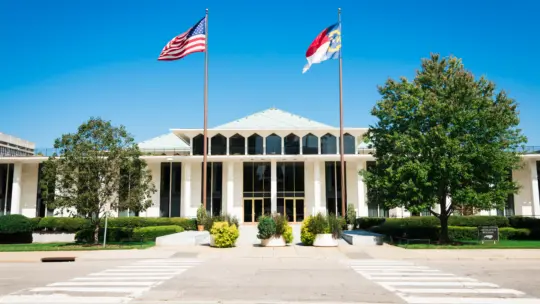



The North Carolina Senate has adopted the conference report for House Bill 328, titled “Regulate Hemp-Derived Consumables.”
The conference report must still be adopted in the House and be signed by the Governor before becoming law. If enacted, this legislation would fundamentally reshape the legal landscape for businesses that manufacture, distribute, or sell hemp-derived consumable products in the state.
The bill would align North Carolina’s hemp standards with anticipated, forthcoming federal changes, impose a strict cap on THC content in finished products, set the minimum purchase age at 21, and re-introduce significant civil and criminal penalties for violations. Businesses that do not adapt risk substantial fines, criminal liability, and loss of their ability to operate.
Below, we summarize the key proposed changes and what they could mean for your business if the bill becomes law.
Goodbye, Good Times: The Total THC Cap
Revised Definition of Hemp
If the bill passes, effective November 12, 2026, North Carolina’s definition of “hemp” would change from a delta-9 THC threshold (not more than 0.3% delta-9 THC by dry weight) to a total THC standard. “Total THC” means the combined amount of:
- Delta-9 THC,
- 87.7% of THCA (which converts to THC when heated), and
- All other forms of THC, including delta-7, delta-8, and delta-10 THC.
Importantly, the proposed new state-level definition of “hemp” specifically excludes synthetic and chemically converted cannabinoids.
The 0.4 mg Total THC Per Container Limit
Under the bill, a finished hemp-derived consumable product would become a “prohibited” product – and a Schedule VI controlled substance – if it contains:
- More than 0.4 mg of total THC per container (measured by the innermost packaging in direct contact with the product at retail), OR
- Any synthetic or chemically converted cannabinoid.
This is an extremely low threshold. Most intoxicating hemp-derived products currently on the market likely exceed this limit and would become illegal to manufacture, sell, deliver, or possess if this bill becomes law, with such changes taking effect on November 12, 2026.
Licensing and Registration
Notably, this bill would not create a new state licensing, registration, or permit program specifically for hemp product manufacturers, distributors, or retailers.
However, the absence of a licensing framework would not reduce legal exposure. The bill would create direct criminal and civil enforcement mechanisms that apply to all businesses in the hemp supply chain regardless of licensing status. Businesses should continue to comply with any existing state and local business licensing requirements and monitor whether implementation regulations establish new permitting obligations if the bill becomes law.
Labeling and Packaging Considerations
The bill would not impose new label language or warning statement requirements specific to hemp products. However, packaging would take on critical legal significance because the 0.4 mg total THC cap would be measured “per container”, defined as the innermost package in direct contact with the product offered for retail sale.
This means packaging decisions would directly determine whether a product is legal or illegal under the proposed law. Manufacturers and retailers should carefully evaluate:
- How products are packaged at the unit level for retail sale.
- Whether multi-serving products can be repackaged into single-serving containers to stay below the 0.4 mg threshold.
- Whether batch testing and certificate-of-analysis documentation supports the THC content claim for each retail container.
Sales Restrictions: Age 21 and Over Only
Under the bill, effective July 15, 2026, it would become unlawful to sell or deliver any hemp-derived consumable product to a person under age 21. It would also be unlawful for anyone under 21 to possess such a product.
A “hemp-derived consumable product” is broadly defined as any finished good intended for human ingestion or inhalation containing any concentration of any hemp-derived cannabinoid. Topical products and FDA-recognized seed-derived ingredients are excluded.
Sellers would be required to demand proof of age if they have reasonable grounds to believe the purchaser is under 21. Violations would be classified as Class 2 misdemeanors.
Key Proposed Compliance Deadlines
- July 15, 2026 — Age-21 purchase and possession restrictions would take effect; civil penalties for underage sales would become enforceable.
- November 12, 2026 — New total-THC hemp definition would take effect; prohibited finished hemp-derived consumable products would become Schedule VI controlled substances; product-related offenses (manufacture, sale, delivery, possession) would apply to products made or sold on or after this date.
Proposed Penalties and Enforcement
Proposed Civil Penalties for Underage Sales
- First violation: $2,500
- Second violation (within 3 years): $7,500
- Third violation (within 3 years): $15,000
- Fourth or subsequent violation (within 3 years): $25,000
Proposed Civil Penalties for Selling Prohibited Products
- First violation: $10,000
- Second violation (within 3 years): $25,000
- Third or subsequent violation (within 3 years): $50,000
Each individual sale or delivery would constitute a separate violation. Retail establishments would be responsible for violations committed by owners, officers, managers, employees, or agents acting within the scope of their employment. The North Carolina Attorney General or the local district attorney would be authorized to bring civil actions to recover these penalties.
Criminal liability would also apply if the bill became law. Possessing, manufacturing, selling, or delivering a prohibited finished hemp-derived consumable product after November 12, 2026, would constitute a controlled-substance offense.
How This Would Affect Manufacturers, Distributors, and Retailers Differently
Manufacturers
If the bill becomes law, your primary compliance focus would be formulation and documentation. You would need to ensure that every product you produce contains no more than 0.4 mg total THC per retail container and contains no synthetic or chemically converted cannabinoids. Maintaining thorough batch testing records and certificates of analysis would be essential.
Distributors
If the bill is enacted, you would need to verify that products received from suppliers comply with the new standards before moving them into commerce. You would need to avoid distributing inventory that may exceed the total THC cap or contain prohibited substances. Requesting and retaining documentation from manufacturers confirming compliance would be advisable.
Retailers
Retailers would face the most immediate operational demands if the bill becomes law. You would need to implement age-verification procedures at the point of sale (if not already done), train staff on ID-checking requirements, and establish inventory controls to ensure no prohibited products remain on shelves after the proposed effective dates. Retail establishments would bear direct civil penalty exposure for violations by any employee or agent.
Additional Note: No Automatic Updates if Federal Law Changes
Unfortunately, if federal law changes between now and November 12, 2026 to repeal or delay or weaken the federal hemp “ban”, HB 328 (if enacted) would NOT automatically re-align North Carolina’s state-level hemp laws with the federal hemp laws. Should that happen, North Carolina could foreseeably have more stringent THC limits and hemp-product restrictions than federal law requires, unless and until a new bill is passed at the state level to amend the policies and requirements discussed above.
Next Steps: Consult Experienced Counsel
This proposed legislation could be one of the most significant regulatory shifts for North Carolina’s hemp industry. We encourage hemp industry participants to consult with experienced legal counsel to assess current product lines against the proposed new standards, develop compliant packaging strategies, implement age-verification protocols, and prepare for the potential enforcement landscape ahead. Early preparation is the best protection against costly penalties and business disruption.
Ward and Smith’s Hemp + Cannabis Law attorneys are actively helping individuals and businesses navigate the complex and rapidly changing state and federal laws and regulations governing these industries and their products.