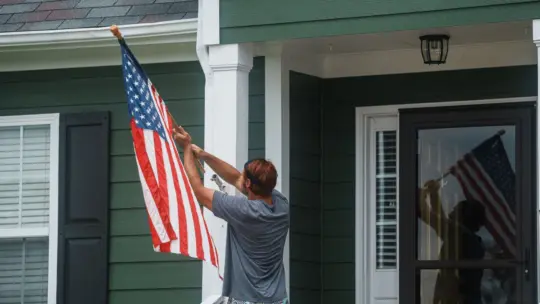


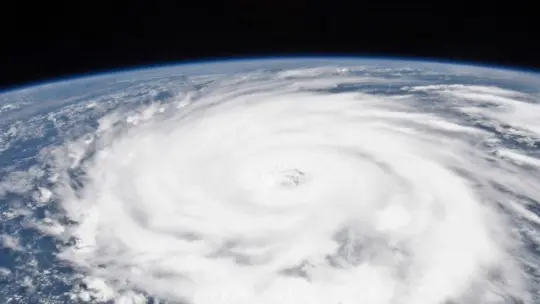
A hurricane warning is issued late on Friday afternoon.
The clubhouse roof needs immediate boarding. Three downed trees are blocking the only road into the community. The pool pump is exposed. The board’s annual budget did not anticipate a $40,000 emergency expenditure, the HOA’s governing documents require a board meeting to authorize unbudgeted spending, two directors have already evacuated, and the management company is fielding calls from owners asking what the HOA is doing about it.
For HOA’s on the North Carolina coast, and increasingly for those in the central and western parts of the state, as Hurricane Helene reminded everyone in 2024, this scenario is not hypothetical. Emergencies are the moments at which the gap between the way the governing documents assume the HOA operates and the way the HOA actually has to operate is most visible. The boards that handle emergencies well are the boards that have already thought through what authority they have, where that authority comes from, and how to document the exercise of it.
This article addresses emergency authority for community HOA boards in North Carolina, with attention to the procedural mechanisms that allow boards to act when the procedures for normal governance are impossible.
The Baseline: Boards Already Have Significant Emergency Authority
The first thing to recognize is that the legal framework already contemplates the need for boards to act in emergencies. The North Carolina Planned Community Act (Chapter 47F) and the North Carolina Condominium Act (Chapter 47C) confer broad authority on HOA boards to maintain, repair, and replace common elements, to retain professionals, and to expend HOA funds for those purposes. The North Carolina Nonprofit Corporation Act (Chapter 55A), under which most associations are organized, gives boards the authority to exercise powers reasonably necessary to manage the affairs of the corporation during an emergency, which the statute defines to include a natural or man-made disaster.
Far from creating an entirely separate set of powers, an emergency such as a hurricane allows a board to exercise many of the powers it ordinarily has, including maintaining the common elements, procuring necessary services, and entering into contracts on behalf of the Association. The distinction is that an emergency may significantly compress the timeline for making those decisions and may not allow the board to follow all of the procedural formalities that the governing documents would ordinarily contemplate.
The questions that come up in actual emergencies are therefore rarely about whether the board can act. They are about (1) who can act when the full board cannot be assembled, (2) what budget authority covers unbudgeted emergency expenditures, (3) how the board documents the action in a way that holds up later, and (4) when the board needs to come back to the owners for approval.
Acting When the Full Board Cannot Be Assembled
Hurricanes do not schedule themselves in accordance with board-meeting quorum requirements. When directors are scattered, some evacuated inland, some without power, some unreachable, the bylaws’ quorum and meeting requirements can become an obstacle to action rather than a guardrail for it.
Most well-drafted bylaws contemplate this in several ways. First, at baseline, North Carolina law permits board action by electronic meeting, telephone or video conference, provided all directors may simultaneously hear and be heard by each other. A board scattered across three states can still hold a valid meeting from cell phones, unless the bylaws or articles of incorporation require ONLY in-person board meetings.
Second, most bylaws permit board action by unanimous written consent. When a meeting cannot be assembled but every director can be reached and agrees to a defined action, written consent is the cleanest path. The consent is documented via a board consent and records the board action.
Third, many bylaws grant the president or a designated officer authority to take emergency action subject to ratification by the board at the earliest practical meeting. This authority is narrower than full board authority and is typically limited to actions necessary to prevent imminent harm, but in the first hours after a storm, this narrow authority allows the board to mitigate further damage.
Boards should pull the bylaws now, before a storm, and confirm which of these mechanisms are available.
Budget Authority for Unbudgeted Emergency Spending
The board’s general authority to spend HOA funds exists within the framework of the annual operating budget. Most HOA governing documents do not prohibit unbudgeted expenditures outright, but many require board approval for expenditures above defined thresholds, and some require member approval for certain increases in common expense liability.
For emergency expenditures, three points are typically definitive. First, expenditures necessary to maintain, repair, or replace common elements are almost always within the board’s general authority, even if not specifically budgeted. The governing documents and the statutes contemplate that common element maintenance is a continuous obligation; the budget is the planning vehicle, not a hard limit on permitted spending.
Second, the Association must have the money to spend. Expenditures that exceed reserve capacity may require a special assessment, which in turn may require a member vote. The procedural requirements in the declaration control. A board that is imposing a $1,500-per-unit special assessment to cover an uninsured loss may have to seek the approval of the membership, depending on the HOA’s governing documents. The procedural requirements for that assessment do not get suspended because of the emergency.
Third, the duty of care still applies. The fact that a decision was made under emergency conditions does not insulate it from review, but it does shape the standard. A director making a hurried decision in good faith, on the best information available, after consultation with the professionals available, is exercising the level of care that an ordinary prudent person in similar circumstances would exercise. The duty of care is not a duty of perfect judgment under perfect conditions. It is a duty of reasonable judgment under the conditions that actually existed.
Documenting the Action
The single most important consideration for a board in an emergency, after taking the necessary action, is to document what it did and why. The documentation does not need to be elaborate, but it should be contemporaneous, and it should cover several recurring elements.
What was the emergency? A short factual statement, “Hurricane X made landfall at coordinates Y on date Z; the community experienced wind damage to common element A and water damage to common element B” establishes the conditions under which the board acted.
What action the board (or officer) took, when, and on whose authority. If the action was taken by an officer pursuant to emergency-action authority in the bylaws, the source of authority should be cited. If the action was taken by the board at a telephonic meeting, the meeting and its participants should be documented. If the action was taken by written consent, the consent should be retained.
What professionals were consulted? The contractor who responded for the tarp installation. The engineer who assessed the structural damage. The insurance broker who confirmed coverage. The attorney who advised on the procedure. Documenting reliance on professionals is a core element of the duty-of-care defense.
What was spent and from what source? Reserves, operating account, line of credit, anticipated insurance recovery — the source of funds should be identified, and the expenditure should be reconciled against budget at the next opportunity.
Ratification at the next board meeting. Even when emergency action was taken under proper authority, the board should formally ratify the action at the next regular board meeting. Ratification consolidates the record and removes any ambiguity about whether the action remains valid.
Insurance and Claim-Coordination Logistics
Emergencies are insurance events as well as governance events. A board that acts to mitigate further damage (boarding up windows, tarping roofs, and removing fallen trees) is typically discharging the insured’s duty to mitigate under the property policy. That duty exists in most commercial property policies, and a board that fails to mitigate can find its claim impaired.
Practical steps in the first hours after a storm: photograph everything before any repairs begin; preserve damaged materials where possible; engage qualified mitigation contractors who understand the documentation requirements of an insurance claim; notify the property carrier promptly; coordinate with the insurance broker on what coverage applies and what the deductibles are. Where the loss is significant, engaging a public adjuster or coverage attorney early is often the difference between a recovery that approximates the loss and a recovery that approximates a fraction of it.
For coastal North Carolina associations, the National Flood Insurance Program (NFIP), and the recent federal-shutdown vulnerabilities of NFIP, adds a layer of complexity. Associations that carry flood coverage through NFIP should verify the policy is current and the coverage limits are appropriate. Associations that do not carry flood coverage should evaluate whether their exposure warrants it, particularly in light of FEMA flood-zone changes that have re-mapped portions of the North Carolina coast in recent years.
When to Bring the Owners In
Most emergency actions do not require advance owner approval. The board’s authority is broad enough to handle the initial response. But some downstream consequences of an emergency do require owner involvement. A special assessment to cover uninsured losses typically does. An amendment to the declaration to address a long-term change in the community (for example, a decision not to rebuild a damaged amenity) typically does. A material change in the association’s insurance program may require notice and comment, even if not a formal vote.
When owner involvement is required, the board should not let the urgency of the emergency push it to cut corners on the procedure. The hurricane is the cause; the special assessment is the effect; the procedure for the special assessment is governed by the same documents that governed it before the storm. Owner approval that should have been obtained but was not creates a vulnerability that surfaces months or years later, often at the worst possible time.
Preparing Before the Storm
Effective emergency response begins before the emergency arrives. Boards that successfully navigate hurricanes and other unexpected events tend to have taken several key preparatory steps in advance, allowing them to maintain effective governance and strong relationships with their members during and after the emergency.
Confirm the bylaws do not prohibit electronic meetings, and (ideally) emergency action by the president or another officer subject to board ratification. Amend the bylaws if they include such a prohibition. Maintain current contact information for every director, including cell phones and personal email addresses that will work when HOA email is offline. Maintain a relationship with a small set of qualified emergency contractors. Maintain current insurance documentation in a location accessible from a phone. Maintain a current list of professionals, i.e,restoration contractor, attorney, and engineer, and their contact information.
A board that has rehearsed its authority and its procedures handles the actual event with discipline rather than improvisation, and the documented record that emerges supports the board’s discharge of its fiduciary duties at a moment when those duties are under the most pressure.