


Across the Carolinas, the conversation about property insurance has centered on cost, and for understandable reasons.
Premiums have climbed sharply, insurers have asked for steep increases that regulators have negotiated downward, and some policyholders have faced non-renewal. Yet for a business owner or a community association board, the costlier surprise is often not the premium. It is the discovery, in the days after a storm, that the policy everyone is counting on does not reach the loss sitting in front of them.
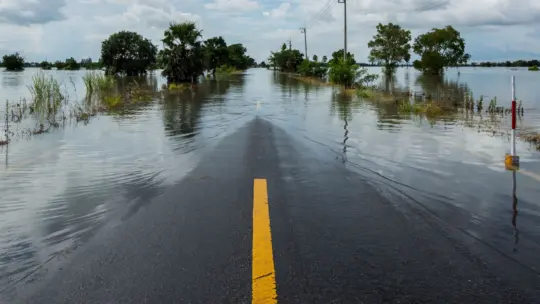
Recent seasons have made the point a vivid reality for many policyholders in the Carolinas. Helene carried catastrophic flooding deep into western North Carolina and across the upstate of South Carolina, while the coastlines of both states remain exposed to wind, storm surge, and the flooding that follows a tropical system. The lesson that keeps repeating is not that insurance outright failed the people who held it. It is that the coverage in place was narrower than its owner believed, and the gap became visible only when it was too late to close it. The encouraging side of that lesson is that almost every gap can be proactively found and addressed in calm weather, well before a claim is ever filed.
Wind Is Covered, Water Often Is Not
One of the most common gaps is the line between wind and water. Most homeowners, dwelling, and commercial property policies cover damage from wind and named storms but exclude flood, which has to be insured separately through the National Flood Insurance Program or a limited private market.
In the areas Helene struck hardest, only a small fraction of properties carried flood coverage, and where that coverage did exist, it was necessarily capped for both structure and contents and often at levels well below the sustained losses. When wind and water both contribute to a single loss, the way the damage is characterized can decide the entire claim. North Carolina recognizes that more than one cause can combine to produce a loss, yet its courts will enforce policy language that withholds coverage whenever an excluded cause such as flood plays a part, regardless of what else contributed. That puts a premium on the insured’s documentation and often on the insured procuring costly engineering evidence about what actually caused the damage. Commercial policies add a further layer, because sub-limits, deductibles, and waiting periods to qualify for business income and extra expense (i.e., business interruption) coverage can differ depending on whether a loss is treated as a named storm, a flood, or storm surge, and those definitions tend to overlap in ways that are easy to miss until a claim turns on them.
When the Doors Close but the Building Stands
For a business, physical damage is only part of the exposure. Business interruption coverage is meant to replace income lost when a covered event halts operations, and many commercial policies extend it to losses caused by an order of civil authority, such as an evacuation or a road closure that blocks access to the premises. That feature proved central after Helene, when many businesses suffered no direct damage yet were cut off from workers and customers by washed-out roads and prolonged outages of power, water, and communications. Recovering those losses is rarely automatic. Insurers and policyholders often disagree about how to measure income that would have been earned had the storm not struck, especially when a disaster reshapes the local economy for months afterward. A company that already understands how its policy defines the covered period, the waiting period, and the trigger for civil-authority coverage stands on far firmer ground than one reading those terms for the first time in the middle of a claim.
The Master Policy and the Gap Beneath It
Community associations face a parallel set of surprises, and they begin with the master policy. Whether the association insures the interiors of units or only the structure to the studs depends on the governing documents, and the seam between the master policy and an owner’s individual policy is exactly where coverage tends to slip. Two gaps recur. The first is the deductible. Carriers increasingly apply percentage deductibles for wind and hail, sometimes a specific percentage of the insured value, which on a large building can translate into a six-figure amount that the association must absorb before coverage responds. When that figure outstrips the reserves, the board may levy a loss assessment that spreads the shortfall across every owner, and many owners carry only a small amount of loss-assessment coverage on their own policies, well below the share they could be asked to pay. The second is the cost of rebuilding to current code. A standard policy may pay only to restore what was there before or may afford a relatively low (and often insufficient) sublimit for ordinance or law coverage. In these situations, an older building damaged in a storm can face substantial upgrade costs that fall outside the available coverage unless the association has added ordinance or law protection. Outdated property valuations and actual-cash-value settlements compound the risk, and a lender may insist on replacement-cost terms before it will finance a unit at all.
What to Check Before You Need It
Nearly all of this can be examined while the weather is calm. A business or a board can read its policy with a few specific questions in hand. Does it include flood, and if so, at what limit? Which perils carry separate sub-limits or percentage deductibles, and could the company or association actually fund that deductible from reserves or cash on hand? How does business interruption work, and does civil-authority coverage reach a road closure or an evacuation order? Is the building insured at replacement cost based on a current valuation, and is ordinance-or-law coverage in place for an older structure? For an association, do the master policy and the owners’ individual policies fit together, and have owners been told what loss-assessment limits to carry? A broker who concentrates on community-association and commercial coverage can map these answers, and a yearly review keeps them current as values, buildings, and risks change.
A few protections are worth knowing as well. After a flood, federal rules generally require a denial from the property insurer before a National Flood Insurance Program claim can proceed, and North Carolina regulators have reminded insurers not to penalize a policyholder simply for making that inquiry. When a state of disaster is declared, North Carolina law automatically suspends proof-of-loss deadlines and allows certain premium and debt deferrals, which eases the pressure on a policyholder in the immediate aftermath. Under South Carolina Law, the Director of the South Carolina Department of Insurance may issue emergency regulations applicable to insurance companies upon the Governor declaring a state of emergency. South Carolina policyholders should confirm what, if any, emergency regulations the Director issues in response to a given disaster to confirm what relief may be available.
While none of us need a reminder of the reality that storms will continue to impact the Carolinas, there is value in pausing to reflect on this reality: the policies policyholders purchase in the calm before the storm are the policies that policyholders must turn to and rely on when the storms strike. Ward and Smith’s Insurance Counseling and Recovery attorneys help businesses and community associations review and take stock of their coverage before a loss and pursue what they are owed afterward, and welcome the chance to look at a policy while there is still time to shore it up.