The way people work has changed dramatically over the past several years. Remote work, consulting, online retail, and other home-based businesses have become an…
In 2007, the North Carolina General Assembly established the Renewable Energy Efficiency Portfolio Standards (“Standards”), which required that all investor-owned utilities in the…
Ward and Smith has been ranked in the Best Lawyers® “Best Law Firms” list regionally in 27 practice areas. Firms included in the 2024 “Best Law Firms”…
Ward and Smith is delighted to welcome a dynamic cohort of five attorneys. Representing a breadth of capabilities spread throughout multiple offices, these professionals…
Ward and Smith proudly celebrates an incredible achievement—over half of our esteemed attorneys have gained recognition from one of the nation’s most respected legal…
Ward and Smith shines bright in the 2023 edition of “Best Law Firms.” U.S. News & World Report and Best Lawyers® released their annual rankings that recognize…
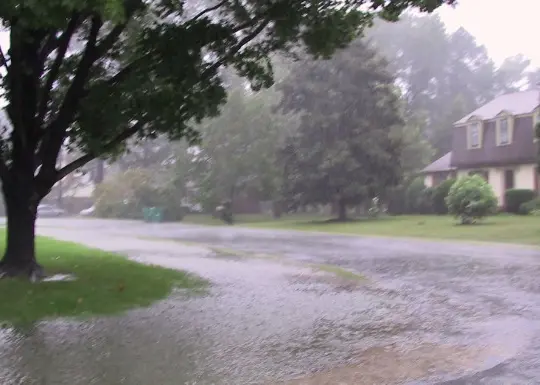
Many homeowners in North Carolina experience issues with excessive surface water flow and localized nuisance flooding after rain events. How communities deal with these…
Recently, I detailed a variety of land use laws and land use regulations pertinent to community associations and community association managers. The webinar, which…
Join us for the last Community Association Building Blocks webinar of the year on December 9. Attorney Clint Cogburn will discuss how zoning and land use…
The explosion of short-term rental properties through North Carolina – from mountain cities to coastal destinations, and cities and towns in between – has…
On May 1, 2020, in Winston Affordable Housing, LLC v. Roberts, the North Carolina Supreme Court clarified the law surrounding a landlord’s acceptance of…
This week the General Assembly of North Carolina provided some relief to developers with active development approvals. Pursuant to Senate Bill 704, signed into…
On July 8, 2019, Governor Roy Cooper signed into law HB 871, significantly altering North Carolina’s anti-indemnity statute, N.C. Gen. Stat § 22B-1 (“Anti-Indemnity…
When the North Carolina Department of Transportation (“DOT”) exercises its power of eminent domain, in addition to taking private property in fee simple, it…
Before starting a new development project, residential and commercial real estate developers should focus on properly structuring the acquisition and development of the property…
Introduction The power of eminent domain, or “condemnation,” is the power of the government and certain regulated public utilities to take private property for…
Commercial real estate transactions and projects have become more complex and expensive. So, analyzing zoning and land use restrictions prior to the closing has…
The North Carolina General Assembly is requiring North Carolina utilities to purchase energy from renewable sources. The hot sun beating on you and your…
Consider the following scenario: Your client, a builder of residential homes, purchases six vacant lots in a partially developed subdivision consisting of 100 lots.…
Numerous North Carolina municipalities and counties have established historic preservation commissions (“HPCs”). Pursuant to N.C. Gen. Stat. Chpt. 160A, Art. 19, Part 3C, HPCs…
Legal Update As coastal North Carolina continues to see increased interest in living in untapped areas of the “inner banks” and the resulting population…
Read More
Review our Recognized Attorneys and the Methodology for each Recognition by clicking on the Logo below